Increases in average 2021 Medicare Part D premiums
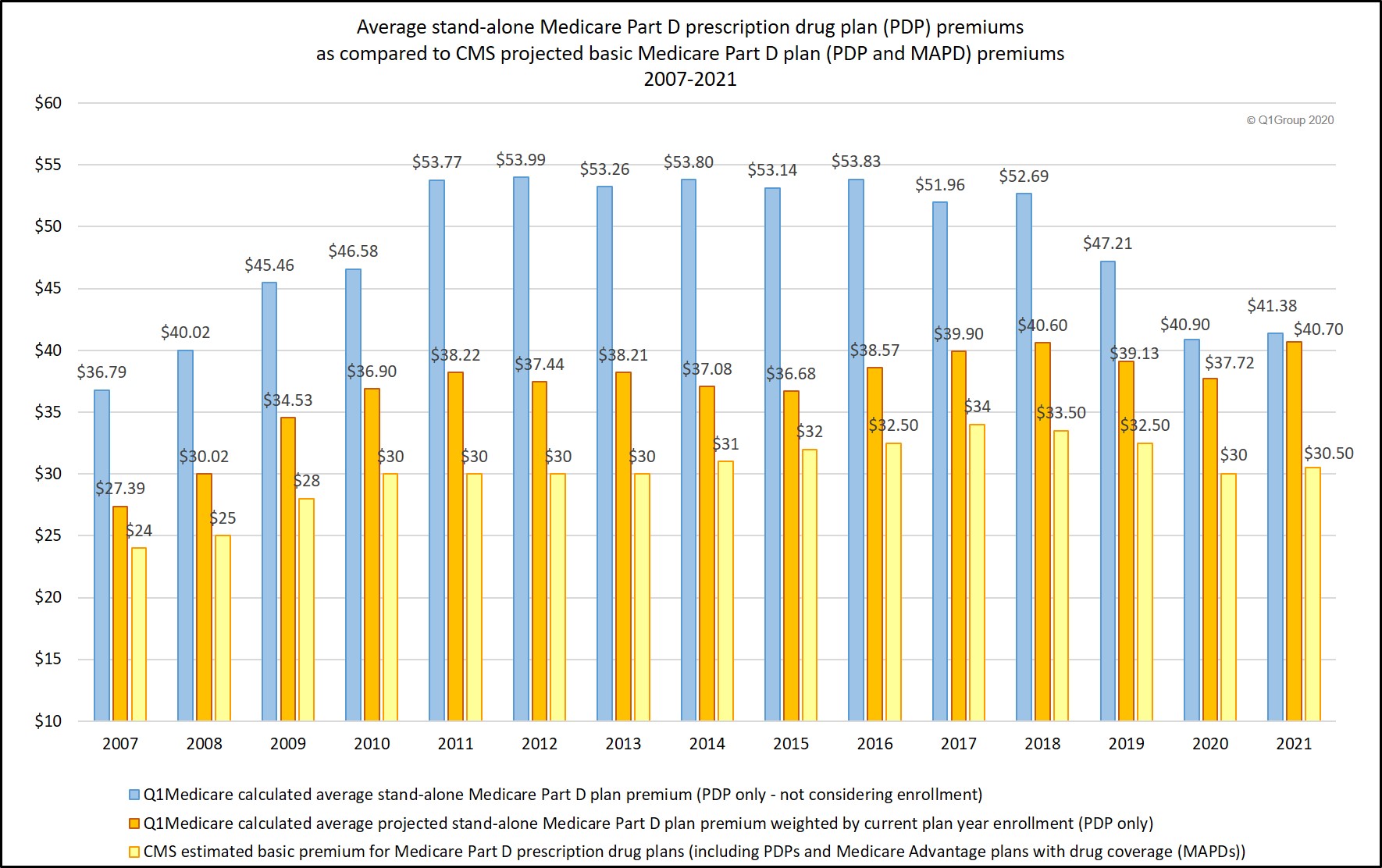
A preliminary analysis of the 2021 stand-alone Medicare Part D prescription drug plans (PDPs) found that the national average 2021 Part D premium (not considering plan enrollment) will increase 1% from $40.90 in 2020 to $41.38 in 2021, supporting the CMS projection of a slight increase in the average monthly Medicare Part D plan premium over the 2020 average premium.
Also, the national average monthly 2021 Medicare Part D premium, weighted by the number of people currently enrolled in each plan will increase to $40.70 - an 8% increase over the 2020 weighted monthly premium of $37.72. The national weighted-average monthly premium increase means that if everyone stays in their current 2020 stand-alone Medicare Part D prescription drug plan through 2021, many beneficiaries will see an increase in their monthly premium.
Please note, the average monthly premium in each state or Medicare region will vary from the national average and can be seen in PDP-Facts.com by clicking on your state.
Bottom-line: The majority of current 2020 Part D plan members can expect premium increases in 2021.
Question: How about a few examples of 2021 premium increases?
As a state-level example, 94% of the Medicare beneficiaries* in Arkansas who are currently enrolled in a 2020 stand-alone Medicare Part D plan can expect an increase in their 2021 monthly Medicare Part D premiums. The average increase is $2.46.
As another example, 66% of the people currently enrolled* in a 2020 Florida stand-alone Medicare Part D plan can expect an average increase in their 2021 monthly Medicare Part D premiums of around $4.83.
For a chart of how each 2020 Part D plan's features are changing in 2021, please see PDP-Compare.com.
* Not considering Low-Income Subsidy eligibility.
Question: Why are the on this site average Medicare Part D premiums higher than premiums projected by Medicare?
The Centers for Medicare and Medicaid Services (CMS) recently issued a press release projecting a slight increase in 2021 Medicare Part D premiums. CMS noted that, "This trend of lower Part D premiums, which have decreased by 12 percent since 2017, means that beneficiaries have saved nearly $1.9 billion in premium costs over that time. Further, Part D continues to be an extremely popular program, with enrollment increasing by 16.7 percent since 2017."
The difference between our calculations and CMS' is that we are only considering stand-alone Medicare Part D plans (PDPs) and do not include the premiums for the Medicare Advantage plans (MAPDs). Many MAPDs have a low or $0 monthly premium and we find these low premiums skew average Medicare Part D drug plan premium figures toward lower values.
Average PDP premium vs. Average weighted* PDP premium vs. CMS' PDP/MAPD average premium
The following chart shows how the average and weighted-average stand-alone Medicare Part D premiums have changed since 2007 - and compares these premium values to the CMS estimated base Medicare Part D premium.
Reminder: Your Medicare plan costs and coverage can (and probably will) change each year.
Please review your Annual Notice of Change (ANOC) document and plan options carefully. You can learn more about your 2021 Medicare plan options at https://PDP-Finder.com/2021.
The annual Open Enrollment Period (AEP or Annual Election Period) for Medicare Advantage plans and Medicare Part D drug plans begins on October 15 and continues through December 7, 2020. The Medicare Advantage Open Enrollment Period (MA OEP) will begin January 1st and continues through March 31, 2021.
Not sure where to begin?
If you need assistance understanding how your 2020 Medicare plan is changing or to learn more about your 2021 Medicare plan coverage options, please call 1-800-MEDICARE (1-800-633-4227) and speak with a Medicare representative.