The Centers for Medicare and Medicaid Services (CMS) is mailing new Medicare cards through April 2019 - and your new Medicare card will no longer have the "letter" after your Social Security-based Medicare number.
As noted by CMS, "[t]he new cards will use a unique, randomly-assigned 11-digit number called a Medicare Beneficiary Identifier (MBI), to replace the Social Security-based Health Insurance Claim Number (HICN) currently used on the Medicare card."
CMS also noted that this initiative "will prevent fraud, fight identity theft and protect essential program funding and the private healthcare and financial information of our Medicare beneficiaries." To learn more about the new Medicare cards, please click on the following link for our FAQ: "What do we need to know about the new Medicare cards?" on this site
Original text of our Frequently Asked Question before the 2018 update:
"What does the letter mean after my Medicare Claim Number?"
Take a look at your red, white, and blue Medicare card. We often hear from people asking what the letter or letters mean that come after their Medicare claim number (for instance "123-45-6789 T"). Below is a partial list of the Medicare Claim Number letters and the meanings provided by the Social Security Administration.
Sample of Medicare card with Social Security-based Health Insurance Claim Number (HICN) (source: CMS)
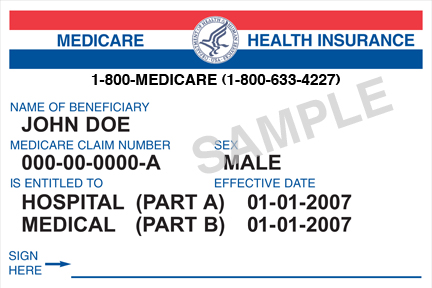
The Social Security number followed by one of these codes is often referred to as a Medicare claim number or Health Insurance Claim Number (HICN). Social Security assigns these codes once you apply for benefits. These letter codes may appear on correspondence you receive from Social Security or on your Medicare card. These Medicare claim numbers will never appear on a Social Security card. For example, if you are the wage earner applying for benefits and your Social Security number is 123-45-6789, then your claim number is 123-45-6789A.
This number will also be used as your Medicare claim number, once you are eligible for Medicare.
|
Code |
Identification |
|
A |
Primary claimant (wage earner) - the most common code
|
|
B |
Spouse, Aged wife, age 62 or over |
|
B1 |
Aged husband, age 62 or over |
|
B2 |
Young wife, with a child in her care |
| B3 |
Aged wife, age 62 or over, second claimant |
| B5 |
Young wife, with a child in her care, second claimant |
| B6 | Divorced wife, age 62 or over |
| BY | Young husband, with a child in his care |
|
C1-C9 |
Child - Includes minor, student or disabled child |
|
D |
Aged Widow, age 60 or over |
|
D1 |
Aged widower, age 60 or over |
| D2 | Aged widow (2nd claimant) |
| D3 |
Aged widower (2nd claimant)
|
|
D6 |
Surviving Divorced Wife, age 60 or over |
|
E |
Widowed Mother |
|
E1 |
Surviving Divorced Mother |
|
E4 |
Widowed Father |
|
E5 |
Surviving Divorced Father |
|
F1 |
Parent (Father) |
|
F2 |
Parent (Mother) |
|
F3 |
Stepfather |
|
F4 |
Stepmother |
|
F5 |
Adopting Father |
|
F6 |
Adopting Mother |
| HA | Disabled claimant (wage earner) |
| HB |
Aged wife of disabled claimant, age 62 or over |
|
M |
Uninsured – Premium Health Insurance Benefits (Part A) |
|
M1 |
Uninsured - Qualified for but refused Health Insurance Benefits (Part A) |
|
T |
Uninsured - Entitled to Health Insurance Benefits
(Medicare Part A) under deemed or renal provisions; or Fully insured who
have elected entitlement only to Health Insurance Benefits (HIB -
Medicare Part A) - (and not yet entitled to retirement benefits -
entitled to Medicare but not yet drawing Social Security Benefits) |
| TA | Medicare Qualified Government Employment (MQGE) |
| TB | MQGE aged spouse |
|
W |
Disabled Widow |
|
W1 |
Disabled Widower |
|
W6 |
Disabled Surviving Divorced Wife |
NOTE: This list is not complete, but shows the most common beneficiary codes.
Remember that Medicare cards are changing April 2018!
As noted above, starting April 2018 and continuing through April 2019, the Centers for Medicare and Medicaid Services (CMS) will begin replacing your old Medicare card that is the subject of this article with a new Medicare card. See our FAQ "What do we need to know about the new Medicare cards?" for more information on this site