Coinsurance is a type of cost-sharing used by Medicare Part D prescription drug plans or Medicare Advantage plans referring to a Medicare plan member paying a percentage of the medication's negotiated retail drug cost or paying a percentage of the cost for a covered healthcare procedure.
In general, insurance works by sharing the cost of coverage between the insurance company (or government) and the plan member.
Insurance cost-sharing can be separated into either (1) coinsurance or percentage of the coverage cost or (2) copayment or a fixed priced for specific coverage.
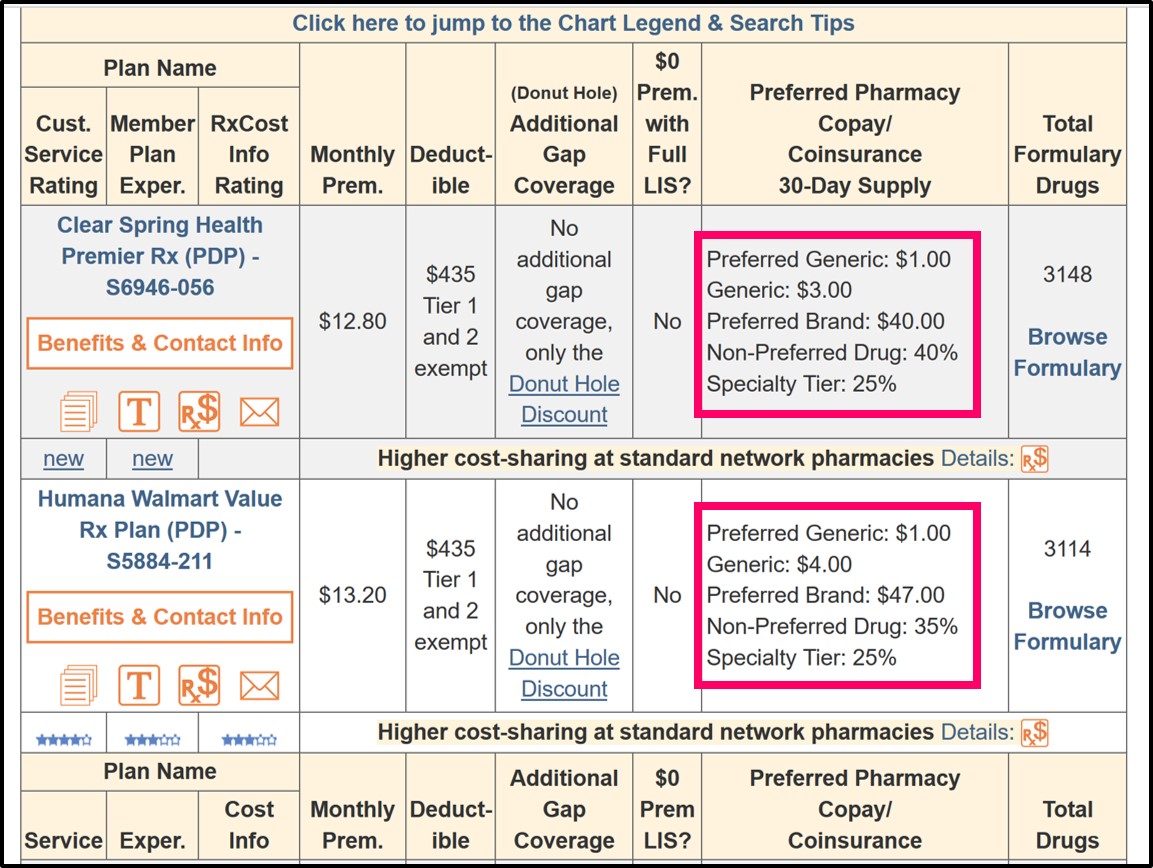
So, like other insurance, coinsurance within a Medicare Part D plan means you would pay a percentage of the retail drug cost for a specific drug and a Medicare Part D plan may have a fixed coinsurance rate (25%) for all formulary drugs - or the plan may give a specific coinsurance rate for all drugs assigned to a logical grouping or formulary Tier of medications (Tier 4 drugs have a 33% coinsurance rate) - and use a fixed copayment for other formulary tiers.
In general, insurance works by sharing the cost of coverage between the insurance company (or government) and the plan member.
Insurance cost-sharing can be separated into either (1) coinsurance or percentage of the coverage cost or (2) copayment or a fixed priced for specific coverage.
So, like other insurance, coinsurance within a Medicare Part D plan means you would pay a percentage of the retail drug cost for a specific drug and a Medicare Part D plan may have a fixed coinsurance rate (25%) for all formulary drugs - or the plan may give a specific coinsurance rate for all drugs assigned to a logical grouping or formulary Tier of medications (Tier 4 drugs have a 33% coinsurance rate) - and use a fixed copayment for other formulary tiers.
As an example, if Tier 5 "Specialty drugs" have 25% coinsurance and you purchase a covered Tier 5 medication with a monthly retail cost of $100 – you would pay $25 and your plan would pay $75. So, the Medicare beneficiary is responsible for a certain percentage of the prescription costs (such as 25%) and the insurance company is responsible for the remaining percentage of the prescription cost (in this example, 75%).
Example of prescription drug coinsurance... the medication NIACIN 500 MG TABLET is a Tier 4 medication costing the plan member 36% coinsurance per month on one plan and another plan may have it classified as a Tier 4 medication, costing 50% coinsurance per month.
Yet other Medicare drug plans group this medication as a Tier 2
medication with a flat $15 copayment. The retail cost for the
medication is estimated at $900. In this example, the copayment is much more
cost-effective.
However, with many other medications, coinsurance cost-sharing is more
cost-effective than a fixed copay. It all depends on the medication,
its formulary drug tier, and the Medicare Part D plan's negotiated
retail drug price.
Cost-Sharing and Medicare Advantage plans.
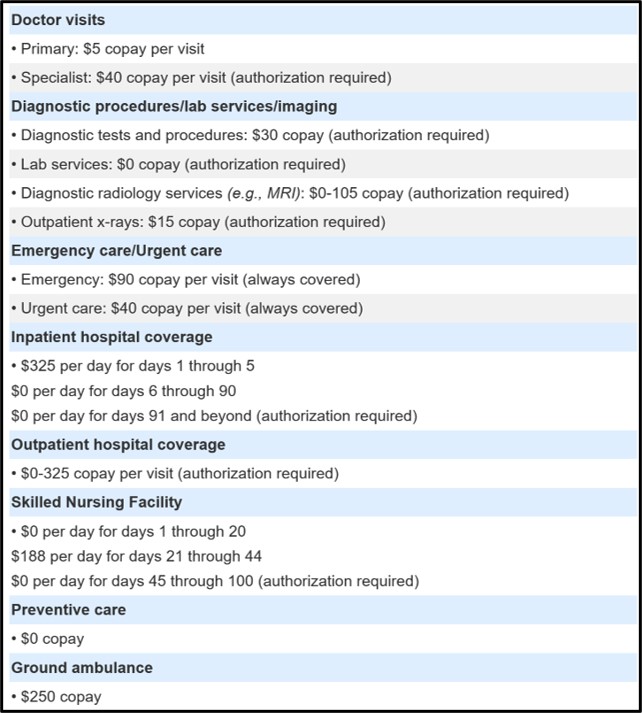
Like stand-alone Medicare Part D plans, in a Medicare Advantage plan, you may pay a percentage of the cost of a health-care procedure or you may pay a flat copay per visit. For example, as you can see in the graphic below, you may pay a $5 copay for a Primary Care Physician (PCP) visit.
Here is an example of how healthcare cost-sharing (coinsurance and copay) can be seen in a Medicare Advantage plan coverage. You can review the Medicare Advantage plans in your area (if available) using our Medicare Advantage Plan Finder: MA-Finder.com/44319 - just choose your state and county or enter your ZIP to begin.
For more information, please see also our Frequently Asked Questions (FAQ) about "Copayment" or "Copay" and "What is Medicare Part D or Medicare Advantage plan cost-sharing?"
- Browse Medicare Part D prescription drug plans
- Browse Medicare Advantage plans (MAPD)
- Sign-up for our Medicare Part D Newsletter.
- Still have a question? Click here to let us know.