On this site, we use the term “cost-sharing” to represent both:
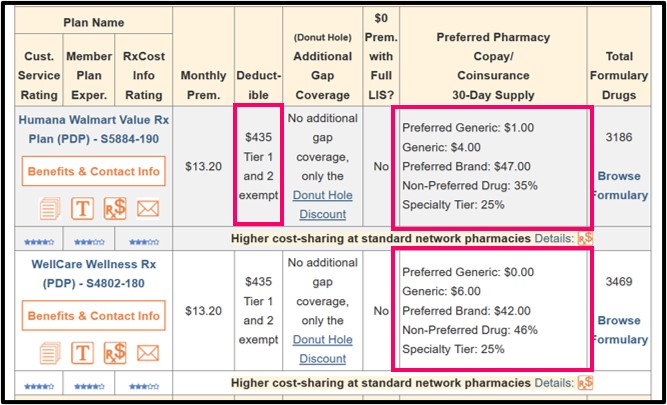
(1) “Copays” (a fixed dollar amounts for specific services or items - such as a $30 copay for a Primary Care Physician (PCP) visit or a $47 copay for a Tier 3 drug) and
(2) “Coinsurance” (paying a percentage of the total cost of something so that the actual coverage cost is difficult to predict - such as a Tier 5 drug costing 33% of retail or a medical procedure that costs 25% of the total procedure).
"Coinsurance", is defined by the Centers for Medicare and Medicaid Services (CMS) is as:
The amount you may be required to pay for services after you pay any plan deductibles. In the Original Medicare Plan, this is a percentage (like 20%) of the Medicare approved amount. You have to pay this amount after you pay the deductible for Part A and/or Part B. In a Medicare [Part D] Prescription Drug Plan, the coinsurance will vary depending on how much you have spent. (source: Medicare.gov)
CMS also notes in the Medicare & You Handbook that coinsurance is an "amount you may be required to pay as your share of the cost for services after you pay any deductibles. Coinsurance is usually a percentage (for example, 20%)." [emphasis added] However, in other documents, CMS is more relaxed with the cost-sharing definitions using the phrase, “[beneficiaries will] pay a copayment of
20%”.
You can review each Medicare plan's cost-sharing details (copayment
or coinsurance for all phases of coverage and pharmacy types) by click
on the "Rx$" icon under the plan name when using our Medicare Advantage Plan Finder or MA-Finder (enter your ZIP to begin) or our stand-alone Medicare Part D Plan Finder or PDP-Finder (choose your state to begin).
See also our Frequently Asked Question: "What is a Medicare Part D Copay?"
- Browse Medicare Part D prescription drug plans
- Browse Medicare Advantage plans (MAPD)
- Sign-up for our Medicare Part D Newsletter.
- Still have a question? Click here to let us know.