Most Part D plans offering coverage during the Coverage Gap only offer the Donut Hole coverage for a limited number of formulary medications. In fact, a Medicare drug plan may only offer coverage for generic medications – and some of these plans charge a higher copayment for generics during the Coverage Gap. Other Medicare Part D plan will provide limited generic and brand-name drug coverage through the Donut Hole or Coverage Gap, and you can see from the enrollment figures that only a fraction of beneficiaries enrolled in these plans.
When you may receive a benefit from a Part D plan with Donut Hole coverage:
- You must have annual retail medication costs over your plan's Initial Coverage Limit ($5,030 in 2024) or retail drug costs of over $420 in 2024.
- If you are enrolled in a Part D plan that provides generic coverage through the donut hole then you will receive a benefit if you are using a large number of generic drugs or rather expensive generic medications
- If you are enrolled in one of the few Part D plan that provides some brand-name and generic coverage and you use the drugs that are covered through the Donut Hole.
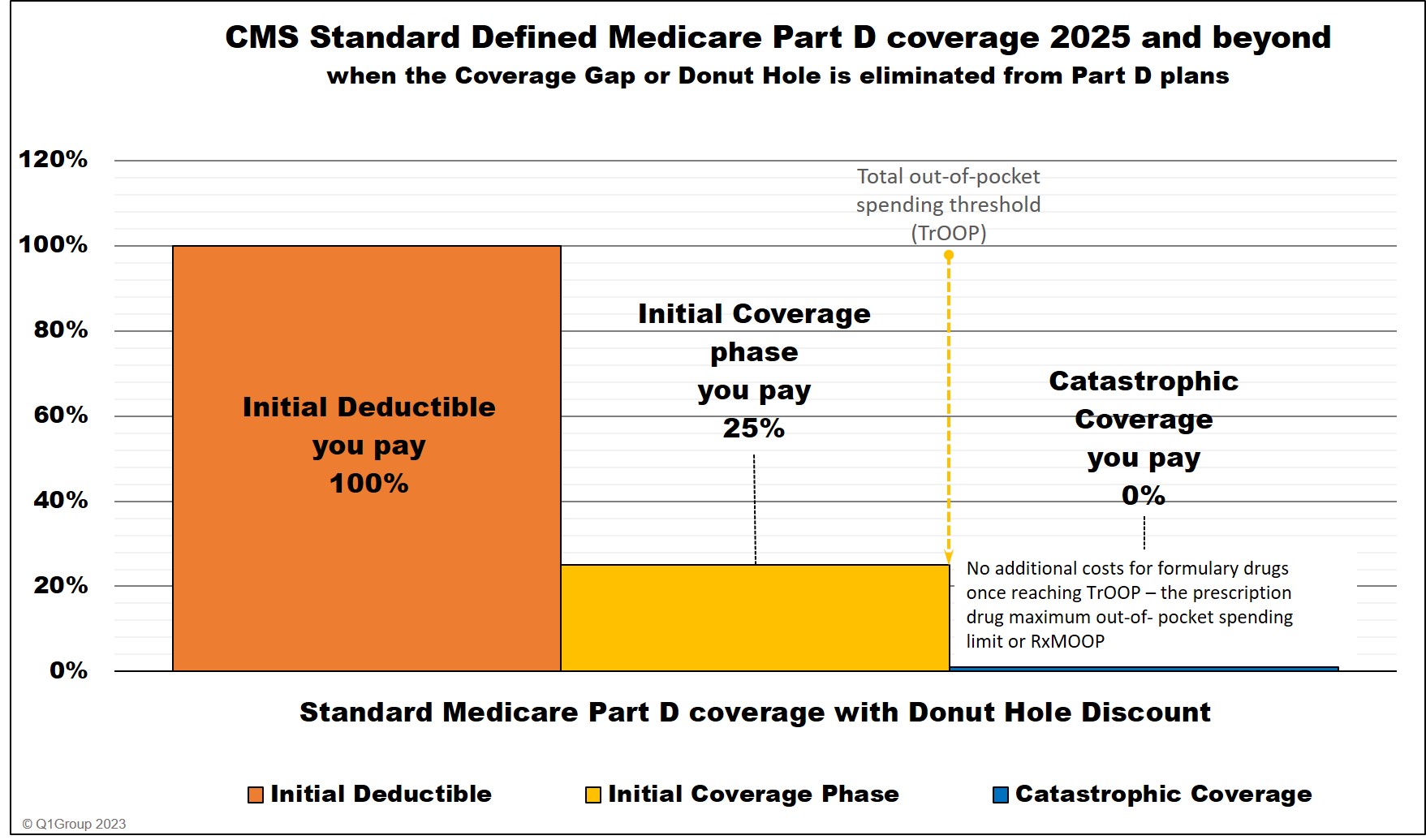
Starting in 2025, the Inflation Reduction Act (IRA) eliminates the Coverage Gap (Donut Hole). In 2025 and beyond, Medicare Part D beneficiaries will stay in the Initial Coverage phase until their out-of-pocket spending for Part D formulary drugs (TrOOP) reaches the maximum out-of-pocket spending limit for Part D formulary drugs (RxMOOP) - which is set at $2,000 for 2025. After reaching RxMOOP, Medicare Part D beneficiaries will enter Catastrophic Coverage and have a $0 copay (no additional costs) for all formulary Medicare Part D drugs through the remainder of the year.
2025 Medicare Part D coverage
Tip: You will not receive much of a benefit from your Part D plan that offers Donut Hole coverage:
- If your annual retail prescription costs do not exceed, or only slightly exceed, your plan's Initial Coverage Limit. For example, if your average monthly retail costs in 2023 of $390 or $430 in 2024, you will enter the Donut Hole in late-December, but you may pay a much higher monthly premium
(triple as much as a Part D plan with no Donut Hole coverage). So,
the benefit of a few days of Donut Hole coverage will probably not
justify a year of higher monthly premiums.
- If you use only low-cost generics, you may be able to get the
same negotiated prices at local retail pharmacies (such as WalMart) –
even in the Donut Hole.
In 2009, no Medicare Part D plan provides complete brand-name and generic drug coverage through the Donut Hole. See the types of Gap Coverage available in 2009 as compared to 2008.
Most 2009 Part D plans offering coverage during the Donut Hole only offered additional coverage for generic medications – and some of these plans charge a higher copayment for generics during the Coverage Gap. Only three (3) Medicare Part D plans (one in FL, one in WI and one in MI) provide limited brand-name drug coverage through the Donut Hole or Coverage Gap, and you can see from the enrollment figures that only a fraction of beneficiaries have enrolled in these plans.