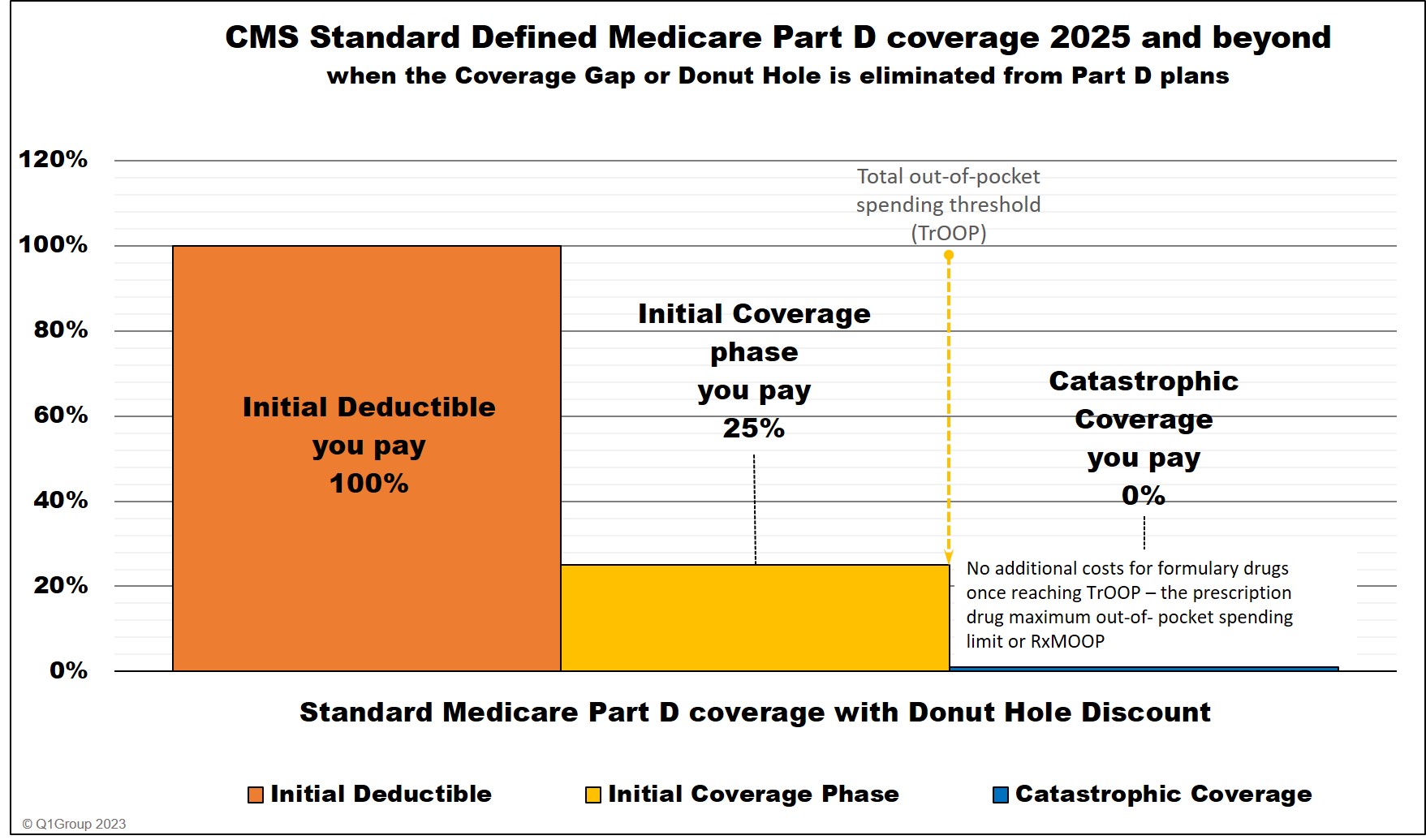
Important: Since 2024, the Inflation Reduction Act (IRA) eliminated cost-sharing for formulary Part D drugs in the Catastrophic Coverage phase. and in 2025, the IRA eliminated the Coverage Gap (Donut Hole).
This means, if you exit the Initial Coverage phase and enter the Catastrophic Coverage phase, you will pay nothing more (cost-sharing will be $0) for all formulary Medicare Part D drugs through the remainder of the year.
If you reached the Catastrophic Coverage phase in 2023 or before, you paid the greater of (1) a flat fee (set annually) or (2) 5% of the plan's negotiated retail drug cost for your formulary medications, depending on the type of drug -- generics or preferred brand drugs that are multi-source drugs vs. all other drugs.
And before 2024, Catastrophic Coverage cost-sharing was the same for all Medicare Part D plans - but, Medicare plans had different retail drug prices that affected your drug costs in the pre-2024 Catastrophic Coverage phase.
Medicare Part D coverage 2006 to 2023

For example, in 2023, you paid the higher of either 5% of retail prices or $10.35 for brands or $4.15 for generics in Catastrophic Coverage.
So if you used a single-source, brand drug with a $100 retail price, you paid $10.35 since the fixed co-pay of $10.35 was more than (5% of $100) or $5. If another brand drug you used had a $150 retail cost, you still paid $10.35 since this amount is still higher than (5% of $150) or $7.50. In such an example, the retail drug cost did not affect your fixed Catastrophic Coverage cost.
However, if "Medicare Part D Plan AAA" has a retail cost for Drug X of $400, you would pay $20 in the Catastrophic Coverage phase (5% of $400). But if "Medicare Part D Plan BBB" has a retail cost for the same Drug X of $500, you would pay $25 (5% of $500) - or $5 more than the cost with Medicare Part D Plan AAA.
As a real-life example, a popular Medicare Part D drug with a high retail price (assume $6,000), might cost 33% of retail during the Initial Coverage Phase (about $1,980), 25% of retail in the Coverage Gap or Donut Hole ($1,500), and 5% of retail in Catastrophic Coverage ($300). If the retail cost of the medication for another Medicare Part D plan was $7,000, then you would pay $350 in Catastrophic Coverage.
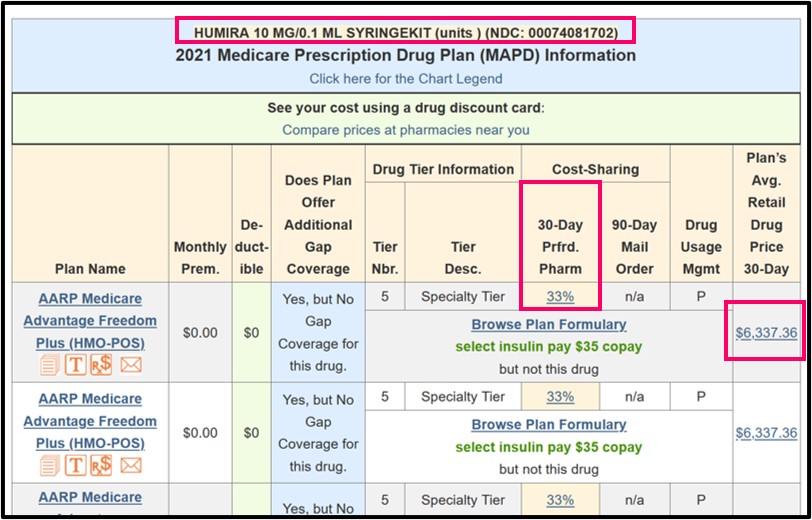
In summary: If you reached the pre-2024 Catastrophic Coverage phase, you found that your Medicare Part D Catastrophic Coverage phase had the same cost-sharing structure as every other Medicare Part D plan. However, your actual drug costs in this phase varied between different drug plans since your Catastrophic costs might be based on your Medicare Part D plan's negotiated retail drug price - and retail drug prices varied between Medicare Part D prescription drug plans.
Again, keep in mind that 2023 was the last year that Medicare Part D beneficiaries will pay cost-sharing in the Catastrophic Coverage phase. For plan year 2024, the Inflation Reduction Act (IRA) of 2022 eliminated beneficiary cost-sharing in the Catastrophic Coverage phase. And for plan year 2025, the IRA eliminated the Coverage Gap (Donut Hole).