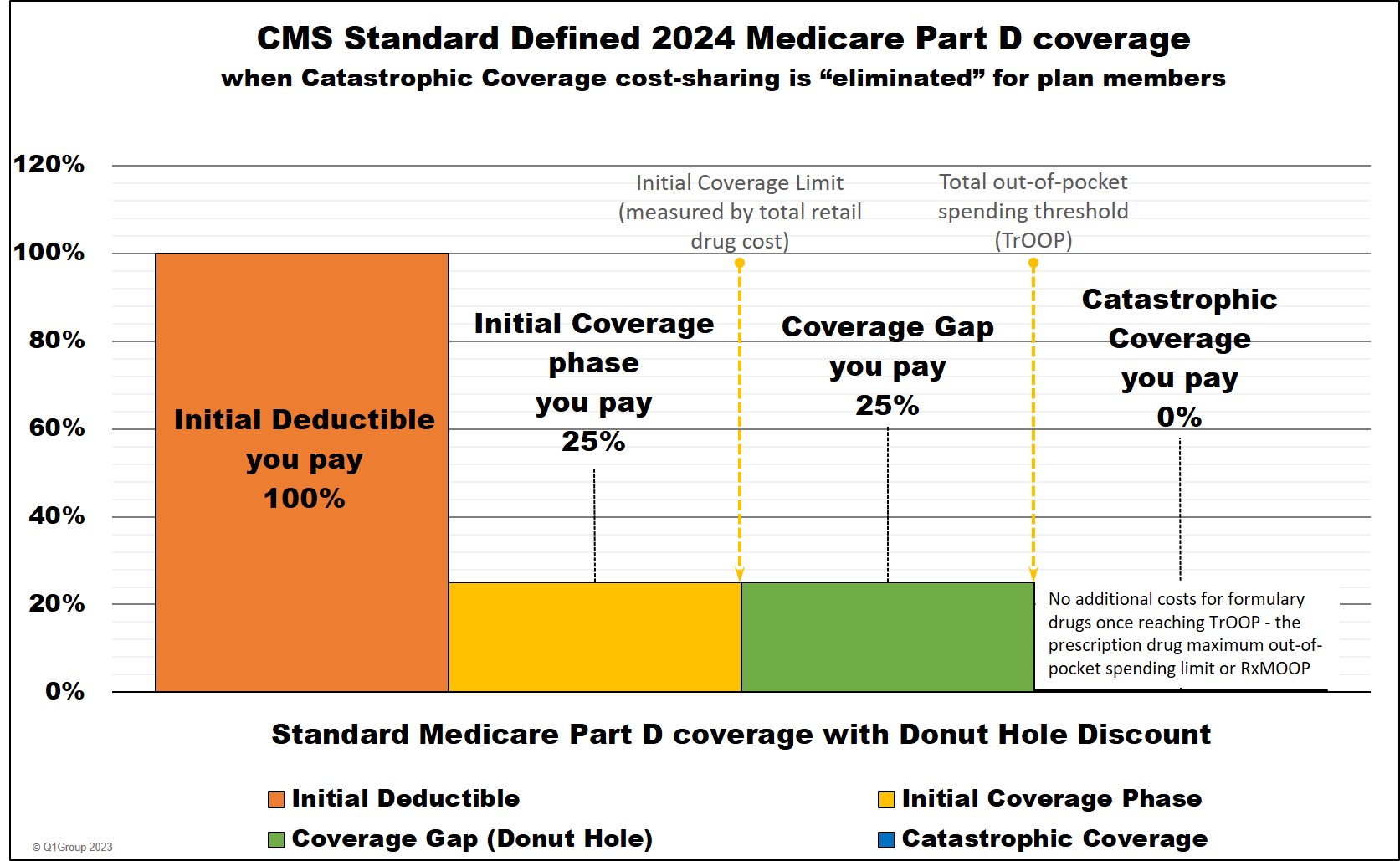
And you will only reach the Catastrophic Coverage phase when your total out-of-pocket drug spending exceeds the annual threshold of $8,000 in 2024. In Catastrophic Coverage, all Medicare beneficiaries pay nothing ($0) for formulary drug purchases through the end of the year.
Note: 2024 and 2025 changes to your Medicare Part D drug coverage.
Starting with plan year 2024, the Catastrophic Coverage phase maximum 5% coinsurance (or any cost-sharing) is eliminated with the establishment of a maximum out-of-pocket prescription drug spending limit (RxMOOP) capping formulary drug costs at the annual 2024 total out-of-pocket cost threshold or TrOOP threshold ($8,000 in 2024 - equating to Part D formulary drugs with an estimated retail value of $12,447). This means that all Medicare beneficiaries will not pay any additional costs for formulary drugs once the reach the 2024 out-of-pocket spending limit (RxMOOP) of $8,000. And, as noted below, in 2024 full-Extra Help was expanded to 150% of FPL and there will no longer be partial-Extra Help.
2024 Medicare Part D coverage
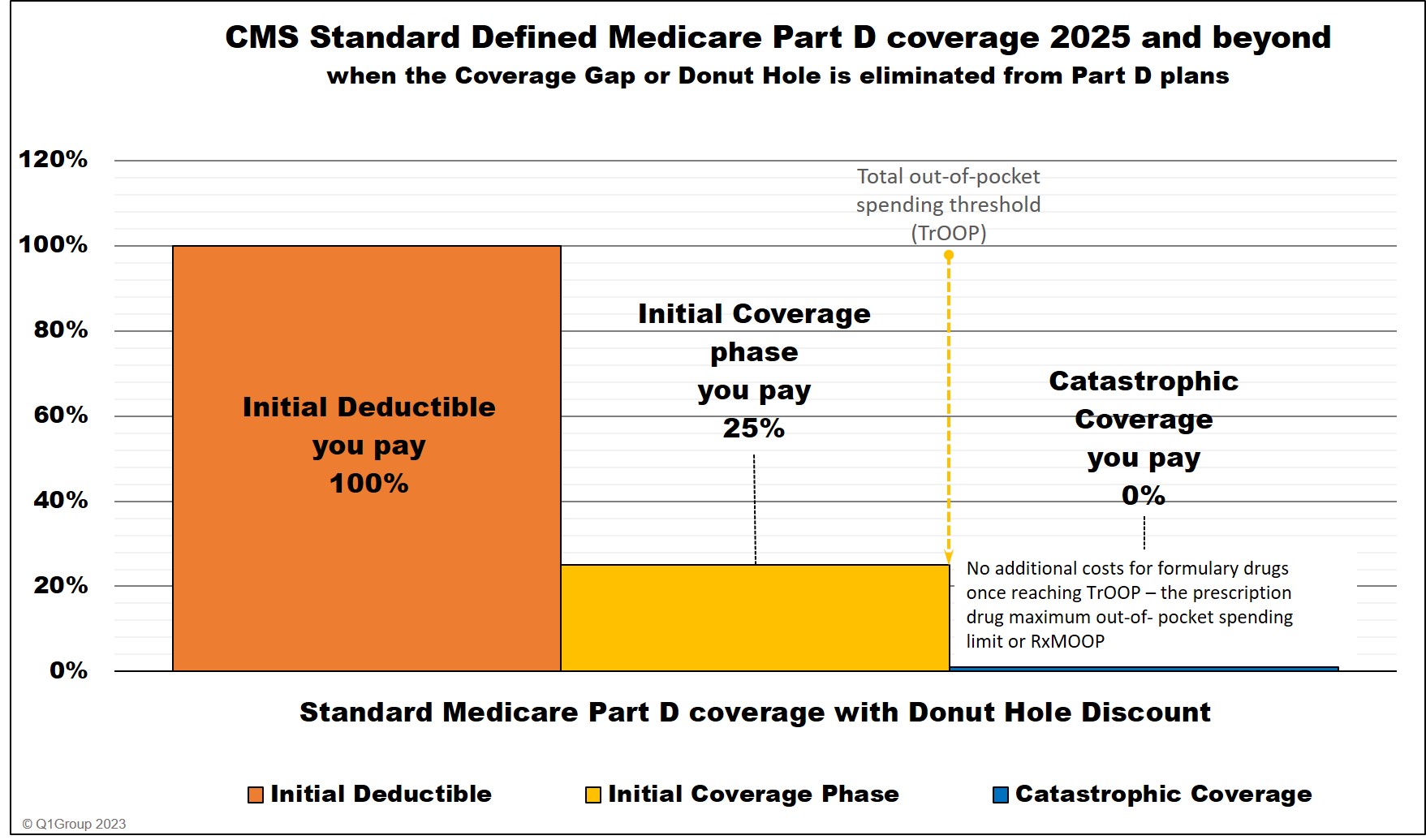
In 2025, the Donut Hole (Coverage Gap) will no longer exist and will be replaced with a $2,000 out-of-pocket spending limit. When a person reaches the $2,000 maximum cap or Part D maximum out-of-pocket spending limit (RxMOOP) - they will not pay any additional costs for formulary drugs for the remainder of the year. In 2025, the $2,000 RxMOOP should be reached when a person purchases Medicare Part D formulary drugs with a retail value totaling about $6,230. (The $2,000 RxMOOP can change each year like other Medicare Part D parameters.)
This means that all Medicare beneficiaries will not pay any additional costs for formulary drugs once the reach the 2025 out-of-pocket spending limit (RxMOOP) of $2,000.
2025 Medicare Part D coverage
No. Qualifying for Extra Help = No Donut Hole = No 75% Donut Hole discount.
Since a person who qualifies for Extra Help never has a Coverage Gap in their Medicare Part D plan, they also will not receive the 75% Donut Hole discount, but instead will continue to pay low prices for their formulary brand and generic prescription drugs throughout the year.
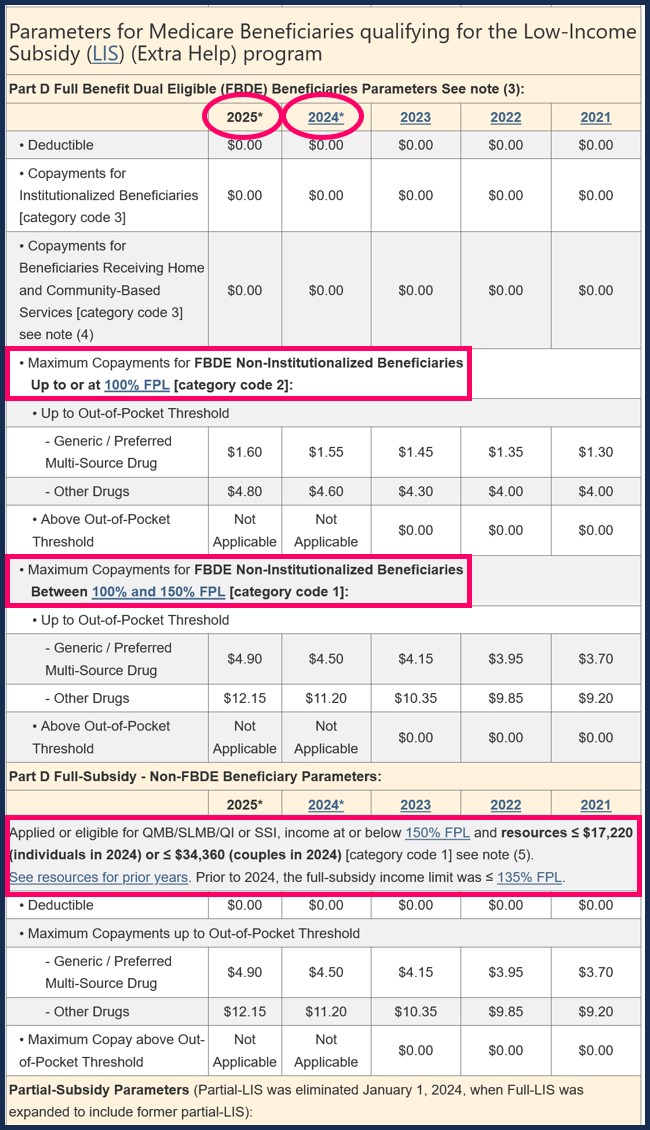
For more details on Extra Help drug copayments during the first phases of coverage, see the chart for Extra Help drug costs for: 2024 and 2025.
Reminder: 2023 was the last year for partial-Extra Help benefits as full-Extra Help limits were expanded in 2024 to 150% of FPL.
(or Federal Poverty Level).
See: 2024 Federal Poverty Level Guidelines (FPL): 2024/2025 LIS Qualifications and Benefits Important: You can apply for Medicare Part D Extra Help at any time!
Remember, if you have limited income and financial resources, you can apply for the Medicare Part D Extra Help program (or Low-Income Subsidy) and receive help paying for your prescription drugs. And since the annual income and resource limits for the Medicare Part D “Extra Help” program change every year, you may now qualify for the Medicare Part D Extra Help program even when you have not qualified in past years.
You can apply for Extra Help at any time of the year by visiting your local state Medicaid office, going to the Social Security website (www.socialsecurity.gov), or calling Social Security at 1-800-772-1213 (TTY users 1-800-325-0778).